SITE FEATURES

SPONSORS

FRIENDS






LATEST NEWS
Is The Vintage Collection Mimicking Vintage Kenner Pricing Mechanics
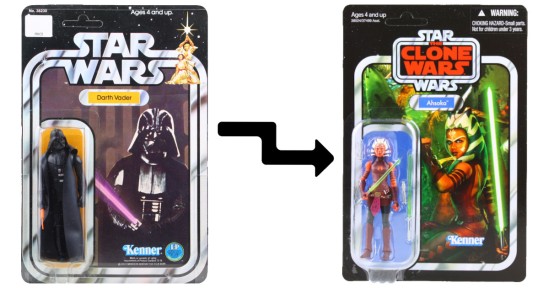
In the modern line, which is defined as anything from 1995 to the present day, there has typically been a fairly tried and true secondary market mechanic in effect. In general, whenever a figure is updated, it would have a negative affect on earlier versions of figures based on the same character. For example, when 2009's BD44 - Clone Commander Cody was released, it suppressed the value of the 2006's inferior 024 - Clone Commander Cody. Continuing along this line of thought, 2010's VC19 - Clone Commander Cody was essentially a re-release of the 2009 figure, but it corrected the upside down belt and more accurately painted the shoulder antenna in silver. Upon its release it likewise suppressed the value of the 2009 figure. Simply put, in the modern line, latest and greatest trumps first when it comes to secondary (or collector) market value. There are naturally exceptions to this rule (Freeze Frame Weequay), but in general, it applies.
With the vintage Kenner line, first is usually the most sought after. Again this is in general as there are individual exceptions that apply (POTF Gamorrean Guard, Emperor, Yoda, etc.). Darth Vader was released on every single Kenner card back from the 12-back Star Wars card through Power of the Force in 1985. The 12-Back release is considered the most desirable. Even among the 12-Backs, there are three versions which are 12-Back A, 12-Back B and 12-Back C representing revisions to the text on the back of the card in chronological order. 12-Back A's are considered the most desirable among the 12-Backs (and even within the 12-Back A's there are sub classifications). The closer you get to the first release of a vintage Kenner figure, the more desirable it is. Of course, with vintage Kenner figures, there were no updates to the figures themselves (Jawa cape fabric and Solo cranial enlargements aside), unlike what we see in the modern line. Therefore, we can't expect the "upgrade" market force to apply. Instead "firstest is bestest" applies to the Kenner line.
Courtesy of specialty waves and "pack refreshes", modern Vintage Collection figures are getting a second shot at life which feature updated Photo Real paint applications to the head sculpts. This objectively makes these later re-releases superior to the initial release in TVC 1.0. In the usual modern line secondary market mechanics, that would mean that these later releases were more desirable and thus more valuable. We are not necessarily seeing that, however. Take the example of VC102 - Ahsoka Tano. That figure had been fetching upwards of $700 on the secondary market when Hasbro announced its re-release via an upcoming Specialty Wave with the addition of Photo Real paint applications. That upcoming release is objectively better than its 2012 counterpart. Based on the typical modern pricing mechanics, we would expect this to suppress the value of the 2012 release. Despite this, the 2012 VC102 - Ahsoka Tano can still fetch nearly $700 on the secondary market (with graded samples cracking $1000):
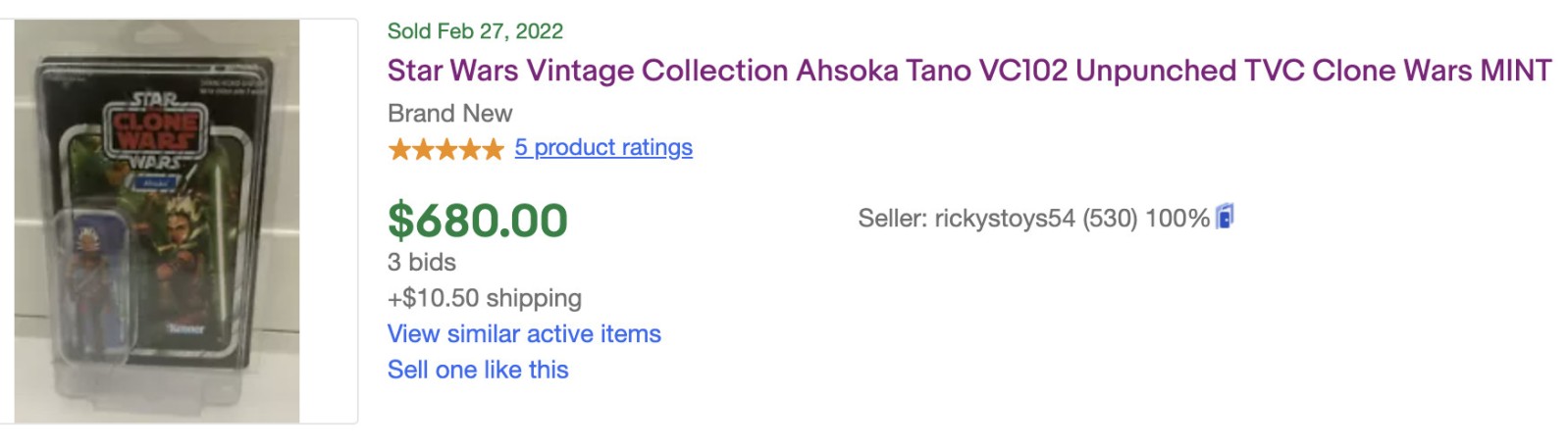
(click for the full sized image)
Part of the reason for this is that figures released in the TVC 2.0 era do not ship upunched. So if a collectors wants an upunched VC102, they have to seek out the TVC 1.0 version, but this alone should not account for several hundred dollars in secondary market value. You can literally preorder that exact same figure with better paint applications RIGH NOW for $14. If typical modern pricing force were in effect, that would bring the TVC 1.0 release well under $100, but we are not seeing that at all. It appears that collectors are valuing the first release for the Vintage Collection, which is a sensibility that is normally seen for the vintage Kenner line. This is a good thing. It means the Vintage Collection is gaining historical significance which had typically been reserved for the original 1978 - 1985 line.
comments powered by Disqus
LATEST PHOTO GALLERIES
VC394 - Imperial Snowtrooper Commander

VC - Obi-Wan Kenobi (Utapau) & Airborne Clone Trooper (212th Battalion)
VC392 - General Veers (AT-AT Commander)

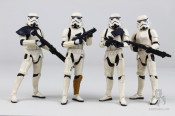
VC - Imperial Remnant Stormtrooper
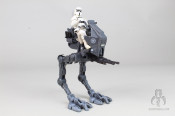
VC - Imperial Remnant AT-RT
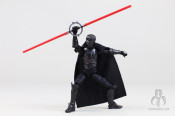
VC386 - Marrok
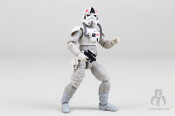
VC387 - Imperial Remnant AT-AT Driver
VC388 - IG-11 (Nevarro Marshal)
VC389 - Imperial Remnant Snowtrooper
VC393 - Greedo

ADDITIONAL REVIEWS IN THE
PHOTO GALLERIES
PHOTO GALLERIES