SITE FEATURES
SPONSORS

FRIENDS





LATEST NEWS
A Discussion About The Direction Of Wrist Hinges
We have had super articulated figures for over twenty years now. The super articulation era was ushered in with 2003's 03-50 Clone Trooper. For years, the term was defined as fourteen points of articulation (POA). To the chagrin of some (one?), that POA count has now been pushed to sixteen courtesy of the thigh swivels. As far as the points of articulation, 3.75" action figures are pretty much maxed out. Toe flexes and articulated fingers wouldn't really work at this scale.
Even though the points at which a figure could be articulated essentially topped out in 2003, that has hardly kept Hasbro from ever increasing the pose-ability of our figures. They did this by expanding the planes of articulation. Swivel (or flat plane) necks gave way to ball-and-socket necks and then ultimately to the barbell necks we have today, Similarly, swivel hips evolved to ball joints and then to the barbell hips. The advancements have been so profound and meaningful that the term “super articulated” has been watered down. The same term can’t be applied to both that 2003 Clone Trooper and this year’s VC309 - Phase I Clone Trooper. That has compelled my collaborator here to coin the phrase “Jedi Level Articulation.”
For lightsaber wielders, the advent of hinged wrists has been a godsend. Swivel wrists were okay, but dynamic two-handed dueling poses were locked behind that single plane of articulation. Hinged wrists added a second plane, and that has made all the difference. Note that I didn’t say ball jointed. Ball joints allow the actual plane of that hinge to be changed. That classic ball joint would be too aesthetically jarring at this scale. So this means that the plane of the hinge is fixed. We get two flavors: either perpendicular to the palm, or parallel with the palm. Since Hasbro is making this posing decision in advance for us, I think we should have a discussion about it.
In my option this should be the rule:
- For characters designed to interact with long rifles, the right wrist should be parallel to the palm and the off hand should be perpendicular.
- For characters designed to interact with lightsabers, both wrists should articulate in the plane parallel to the palm.
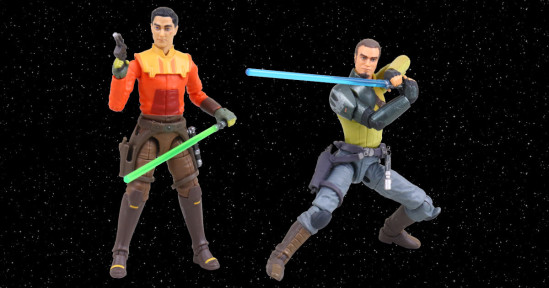
Our friend Tyler of the @SWTVC group made this exact point on John Miko’s Cantina Last Call livestream. With lightsaber wielders, engaging the palm-parallel wrist articulation changes the angle of the grip. If the other hand cannot be articulated along that same plane to match that grip angle, two-handed poses become extremely limited. This could be no better highlighted than with the recent, and 100% newly tooled figures of Ezra and Kanan. Kanan’s wrists both articulate parallel to the palm. It is one of the most dynamic saber figures in history. Ezra has one parallel and one perpendicular. As a result, the two-handed saber poses are no better than what can be achieved with swivel wrists. In my opinion, saber-wielding figures must have both wrists articulate in a plane that is parallel to the palp.
This is meant to be a discussion, so please let us know in the comments if you disagree with this take (and yes, CJ, we already know you don’t care). I don’t want to speak for everyone on this subject, so I’d like to hear from you. But again, because both wrists articulate in a plan parallel to thw palm on Kanan, that figure is definitely better than Ezra.
comments powered by Disqus
LATEST PHOTO GALLERIES
VC397 - Baze Malbus
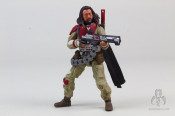
VC394 - Imperial Snowtrooper Commander

VC - Obi-Wan Kenobi (Utapau) & Airborne Clone Trooper (212th Battalion)
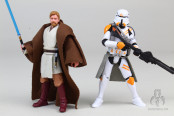
VC392 - General Veers (AT-AT Commander)
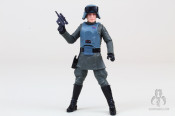
VC - Imperial Remnant Stormtrooper
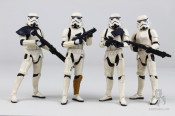
VC - Imperial Remnant AT-RT
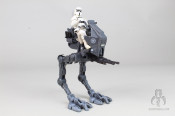
VC386 - Marrok
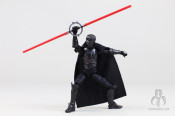
VC387 - Imperial Remnant AT-AT Driver
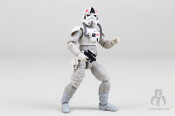
VC388 - IG-11 (Nevarro Marshal)
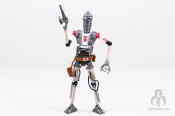
VC389 - Imperial Remnant Snowtrooper
ADDITIONAL REVIEWS IN THE
PHOTO GALLERIES
PHOTO GALLERIES