SITE FEATURES

SPONSORS

FRIENDS






LATEST NEWS
Rian Johnson Didn’t Go Far Enough?
In a piece found on Vox, author David Roberts suggests that Rian Johnson was on the right track in order to bring us a fresh look at Star Wars that challenged not only everything we thought we knew about the franchise, but could have gone a long way to overturn a lot of the tired tropes to which we have all become accustomed throughout the saga.
Roberts suggests that throughout the movie, Johnson tests the boundaries of Star Wars, but by the end of the film most arcs are resolved in what ends up being a safe and predictable fashion.
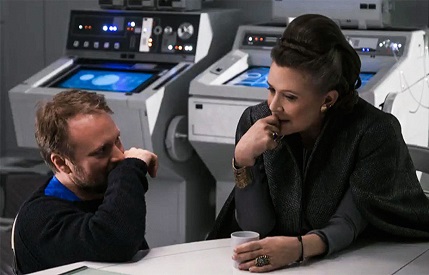 Looking at the first of the three themes, tragedy, Roberts suggests that the film's main arcs are mostly tragic in nature. Just about every tactic, strategy, plan, and idea either fails or backfires. While the Resistance manages to succeed by some measures, such as evacuating D'Qar, destroying the dreadnought, destroying the Supremacy, escaping to Crait, etc, each step comes at a great cost, and there seem to be no consequences for anyone's ill-conceived actions. Roberts focuses on the Canto Bight sequence. I personally disliked it as being out of place and lacking any sense of urgency when Finn and Rose were on a tightly timed mission and literally held the fate of the entire Resistance in their hands. Roberts' point is that the entire mission ends up failing after they get caught, and it results in the intel leak through DJ that the Resistance was evacuating from the Raddus. The problem is that while the heroes' actions directly led to the deaths of many of the remaining Resistance fighters, there is no time taken by Finn or Rose to be held accountable, or realize that they screwed up. As a minor counter to this, I could perceive that Finn's decision later to fly a suicide run into the mouth of the giant canon on Crait was partly due to remorse for his deadly blunder, but this was not fleshed out that way. Roberts goes on to say that the first failure of Johnson here is that while he pushes the theme of tragedy, none of the characters are held responsible for their actions, which result in the entirety of the Resistance fitting comfortably on board the Millennium Falcon by the end of the movie. Johnson's failure, according to Roberts, is that the audience is not forced to reconcile these missteps made by the heroes, and despite the losses, there is hope at the end as Leia says, "We have everything we need." Johnson ended the film in a very Star Warsy note of hope. The overall feel of the film is similar to The Empire Strikes Back. In Episode V, the heroes pretty much get their arses kicked: they flee their base, Han gets frozen, Luke loses a hand, etc. but they persevere to try to regroup for another day. In The Last Jedi, the heroes' actions actually cause similar events to unfold, reducing the group to a pitiful band due to foolish decisions and horrific miscalculations, but the film ends on a note of hope, with Johnson not forcing the audience to realize the blunders and hold the heroes accountable.
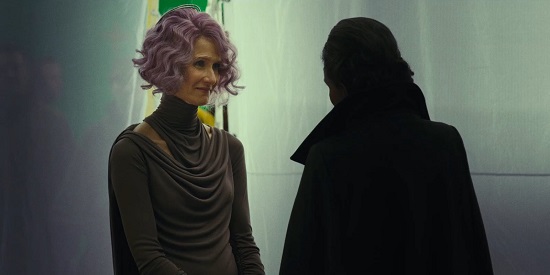 Roberts also breaks down the theme of feminism, and again, how Johnson fell short of doing something revolutionary for Star Wars. Roberts focuses on Poe, an impulsive hotshot, who repeatedly disregards all logic and the sound advice of the women around him. Sure, Han Solo basically did the same thing, but his actions didn't endanger the very existence of the Rebel Alliance, or at a minimum, cause the unnecessary deaths of hundreds of members of the Resistance and a majority of its fleet. Nor did Han commit mutiny. Roberts says that Holdo and Leia repeatedly tried to "set him straight," and he, in turn, repeatedly ignored them with horrific results. Meanwhile Luke, Kylo, and Finn each "disregard the pleas of [their] far more sensible female counterpart, to disastrous effect." Here, one could argue that it was Rey that ignored Luke, despite his own pleas, when she rushed off to face Snoke and Kylo Ren, failing in her attempt to sway Kylo from the Dark Side, and nearly dying in the process.
Poe's insubordination during the D'Qar evacuation inflicts a crippling price on the Resistance Fleet, and his subversive Canto Bight plan, followed by outright mutiny, pretty much cause the rest of the Fleet to be wiped out. Luke spends most of the time being a jerk to Rey, who comes to him with hope and determination. Finn tries to escape like a coward, but changes his mind after meeting Rose. Even Kylo Ren maintains his dark rage and ignores the opportunity to redeem himself and join Rey.
Here Roberts faults Johnson for wimping out on this opportunity to show that the typical male know-it-all character in Star Wars doesn't always have the right answers, but instead, he chooses the safe path:
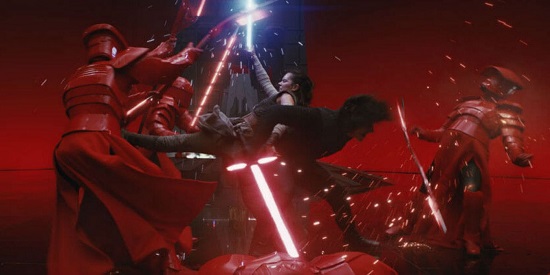 Finally, Roberts believes Johnson failed in the attempt to establish moral ambiguity in the Star Wars universe. Sure, we see plenty of characters and factions throughout the saga skirt the edges of the main conflict, but good/light and evil/dark have generally been very clear to audiences. The promise of a new "grey" path never seemed to fully materialize. Johnson set the tone for possible trope-smashing greyness when Luke teaches Rey that the Jedi were basically fools, and shows Rey how to see both the Light and the Dark sides of the Force. Later, we meet the morally ambiguous DJ, who shows Finn and Rose that the galaxy isn't dominated by a fight between good an evil, but is instead run by those that benefit from conflict itself, regardless of which side wins. However, the film ends up sticking to the good vs. evil theme that has dominated Star Wars since 1977. Roberts suggests that it would have been much more interesting and daring if Johnson had instead tried a different take:
Roberts laments that in the end we got a story which "ultimately retreated to the Star Wars status quo: big monolithic bad guys and scrappy, outnumbered good guys." It leaves us with what should be a fairly conventional Episode IX.
comments powered by Disqus
In almost every case, I thought Johnson didn’t go far enough. He feints and flirts with deeper, darker themes, but again and again, loses his nerve before the tone and trajectory of the saga are seriously threatened.
Roberts suggests that throughout the movie, Johnson tests the boundaries of Star Wars, but by the end of the film most arcs are resolved in what ends up being a safe and predictable fashion.
There are three themes in particular that Johnson pursues in the movie only to abandon them before they reach their logical, if frightening, conclusions: tragedy, feminism, and moral ambiguity. Had he held onto them a little longer, he might have blazed a genuinely new trail, shaken the franchise from its lingering sense of rote repetition, and seared a traumatic-but-awesome experience into the heads of a new generation of viewers, just as The Empire Strikes Back once did.
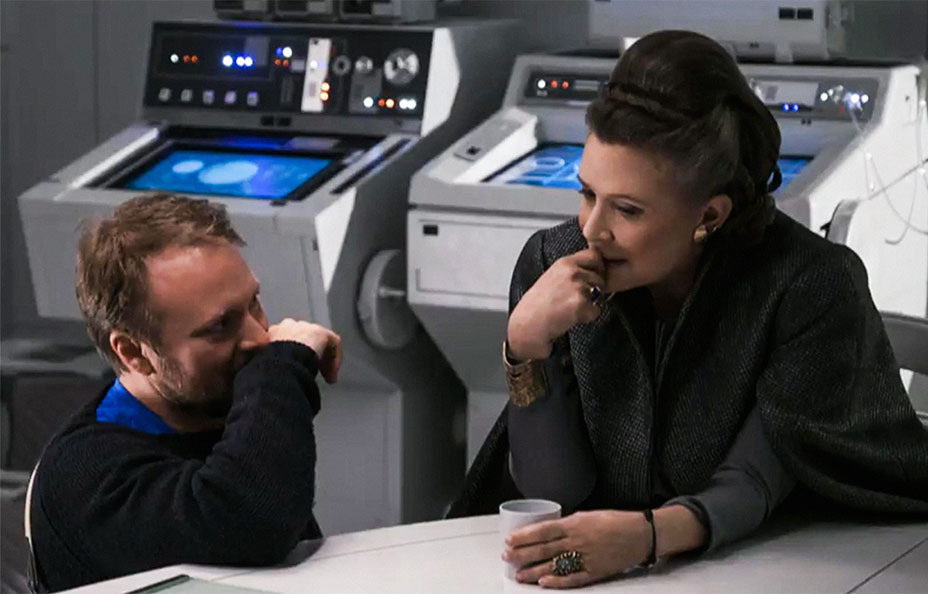
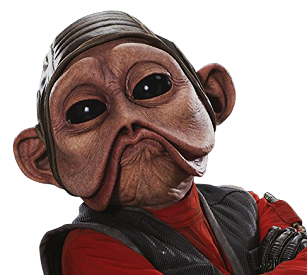
Hahaha! No seriously, Luke is dead, the entire fleet is wiped out, nobody answered the distress call, and everyone left alive will fit on the Falcon. But you have everything you need because you've got Nien Nunb and these porgs.

After multiple actions that should have resulted in death by firing squad, I think Poe deserves the chance to lead the last 20 members of the Resistance that he hasn't manage to kill.
Poe's insubordination during the D'Qar evacuation inflicts a crippling price on the Resistance Fleet, and his subversive Canto Bight plan, followed by outright mutiny, pretty much cause the rest of the Fleet to be wiped out. Luke spends most of the time being a jerk to Rey, who comes to him with hope and determination. Finn tries to escape like a coward, but changes his mind after meeting Rose. Even Kylo Ren maintains his dark rage and ignores the opportunity to redeem himself and join Rey.
For a while, it seems that Johnson is determined to teach gynophobic fanboys the scariest lesson of all: That they should listen to women. But again, he stops short.
Here Roberts faults Johnson for wimping out on this opportunity to show that the typical male know-it-all character in Star Wars doesn't always have the right answers, but instead, he chooses the safe path:
In the end, all the men get their Big Moment: Luke gets his heroic redemption, Kylo gets to be Supreme Leader, and Finn is saved (and kissed). Meanwhile, Holdo sacrifices herself, Rose puts herself in the infirmary, poor Phasma gets smashed in the face and thrown into a fire, and Leia says, as Poe and their haggard band chase the crystal foxes, “What are you looking at me for? Follow him.” Blech.
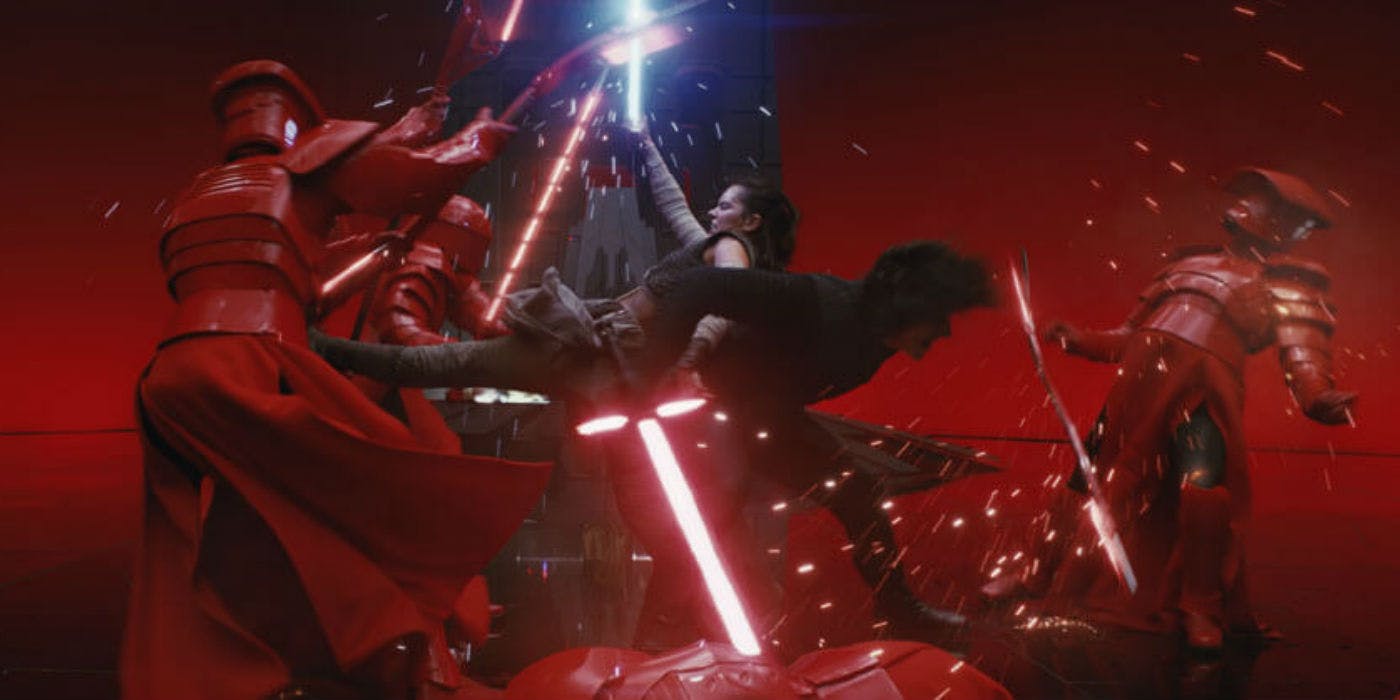
Let's fight together now because it's awesome, but when it's over, let's pretend it never happened and do the regular thing instead.
The climax of The Last Jedi could have set up a central relationship that is not between a teacher and a pupil, but instead between two headstrong young people, powerful in the Force and hungry for new answers.
Roberts laments that in the end we got a story which "ultimately retreated to the Star Wars status quo: big monolithic bad guys and scrappy, outnumbered good guys." It leaves us with what should be a fairly conventional Episode IX.
Here's a picture of Nien Nunb, rightful leader of the Resistance.
comments powered by Disqus
LATEST PHOTO GALLERIES
VC400 - Zeb Orrelios (New Republic Pilot)

VC - Orray & Geonosian Picador

VC - Super Battle Droid & Battle Droids (Geonosis)

VC397 - Baze Malbus

VC394 - Imperial Snowtrooper Commander

VC - Obi-Wan Kenobi (Utapau) & Airborne Clone Trooper (212th Battalion)

VC392 - General Veers (AT-AT Commander)

VC - Imperial Remnant Stormtrooper

VC - Imperial Remnant AT-RT

VC386 - Marrok

ADDITIONAL REVIEWS IN THE
PHOTO GALLERIES
PHOTO GALLERIES