SITE FEATURES

SPONSORS

FRIENDS






LATEST NEWS
BREAKING NEWS: Disney to Buy Most of Fox [***UPDATE***]
CNBC reports:
More on this later...
***UPDATE: 10:51 AM***
CBS News has more info on the deal.
As we've discussed here several times recently, Fox will be keeping and consolidating its news, business, and sports divisions (minus several regional sports networks). Whether or not the Murdochs were interested in selling these assets or intended to keep them, it would have been impossible for Disney to buy them because of conflict since Disney already owns ABC. Despite ensuring this non-starter was absent from the deal, experts expect that the Department of Justice will be taking a very close look. It has already recently stopped the proposed AT&T buyout of Time Warner (owner of CNN), in a move that while not unexpected, some are calling politically motivated. While Fox News is off the table, the fact that Disney is an owner of ABC concerns some that the DOJ be a little more interested in the deal than they normally would. Politics aside, consumers in general should be raising their eyebrows as media giants continue to look to merge and reshape the landscape of the industry. While on the surface, some may suggest these are moves to unfairly reduce competition, other industry experts say this is the natural way of things as companies look to position themselves better as changes in media consumption (notably, "cord cutting") move at lightspeed.
Disney's main goal, it seems, is to better align its assets with the goals of owning the rights to more popular content that it can leverage through its newly announced streaming service, coming in 2019. Disney has already said it would offer this service at a price that would undercut the competitio, notably Netflix and Amazon. Interestingly, Disney will acquire Hulu as part of this deal. It is unknown if Disney will continue with Hulu past the launch of its own service, or if Hulu will be the basis of that service, and be blended into it.
Variety takes a closer look at the intellectual properties, which are of interest to many of our readers.
So Disney will now own many of the Marvel characters that were previously farmed out. They will also own the Avatar franchise, which has already scheduled several sequels over the next few years, beginning in 2020.
Finally, we get this as directly related to Star Wars:
comments powered by Disqus
Disney on Thursday announced a deal to acquire many parts of Twenty-First Century Fox for $52.4 billion in stock. The company will get Fox's movie studios, network Nat Geo, Asian pay-TV operator Star TV, stakes in Sky and Hulu and regional sports networks.
More on this later...
***UPDATE: 10:51 AM***
CBS News has more info on the deal.
Before Disney completes the buyout, 21st Century Fox will separate the Fox Broadcasting network and stations, Fox News Channel, Fox Business Network, FS1, FS2 and Big Ten Network into a new publicly traded media company that will be spun off to its shareholders.
As we've discussed here several times recently, Fox will be keeping and consolidating its news, business, and sports divisions (minus several regional sports networks). Whether or not the Murdochs were interested in selling these assets or intended to keep them, it would have been impossible for Disney to buy them because of conflict since Disney already owns ABC. Despite ensuring this non-starter was absent from the deal, experts expect that the Department of Justice will be taking a very close look. It has already recently stopped the proposed AT&T buyout of Time Warner (owner of CNN), in a move that while not unexpected, some are calling politically motivated. While Fox News is off the table, the fact that Disney is an owner of ABC concerns some that the DOJ be a little more interested in the deal than they normally would. Politics aside, consumers in general should be raising their eyebrows as media giants continue to look to merge and reshape the landscape of the industry. While on the surface, some may suggest these are moves to unfairly reduce competition, other industry experts say this is the natural way of things as companies look to position themselves better as changes in media consumption (notably, "cord cutting") move at lightspeed.
Disney's main goal, it seems, is to better align its assets with the goals of owning the rights to more popular content that it can leverage through its newly announced streaming service, coming in 2019. Disney has already said it would offer this service at a price that would undercut the competitio, notably Netflix and Amazon. Interestingly, Disney will acquire Hulu as part of this deal. It is unknown if Disney will continue with Hulu past the launch of its own service, or if Hulu will be the basis of that service, and be blended into it.
Variety takes a closer look at the intellectual properties, which are of interest to many of our readers.
provides Disney with the opportunity to reunite the X-Men, Fantastic Four, and Deadpool with the Marvel family under one roof and create richer, more complex worlds of inter-related characters and stories that audiences have shown they love.
So Disney will now own many of the Marvel characters that were previously farmed out. They will also own the Avatar franchise, which has already scheduled several sequels over the next few years, beginning in 2020.
Finally, we get this as directly related to Star Wars:
The deal does one more thing for Disney. It unifies the Star Wars universe. The company owns the rights to almost all of the Jedi films thanks to its 2012 purchase of Lucasfilm, but Fox, which produced the 1977 original picture, retains rights to the first chapter in the series. Now, Disney gets its paws on that film, which Iger said, “opens new opportunities” for the franchise.
comments powered by Disqus
LATEST PHOTO GALLERIES
VC397 - Baze Malbus

VC394 - Imperial Snowtrooper Commander

VC - Obi-Wan Kenobi (Utapau) & Airborne Clone Trooper (212th Battalion)

VC392 - General Veers (AT-AT Commander)

VC - Imperial Remnant Stormtrooper

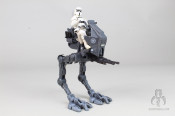
VC - Imperial Remnant AT-RT
VC386 - Marrok

VC387 - Imperial Remnant AT-AT Driver

VC388 - IG-11 (Nevarro Marshal)

VC389 - Imperial Remnant Snowtrooper

ADDITIONAL REVIEWS IN THE
PHOTO GALLERIES
PHOTO GALLERIES